Granny: Chapter Two
- 4.3
- Rating
- 100.00M
- Installs
- Free
- Price
 Analysis by App-foxy
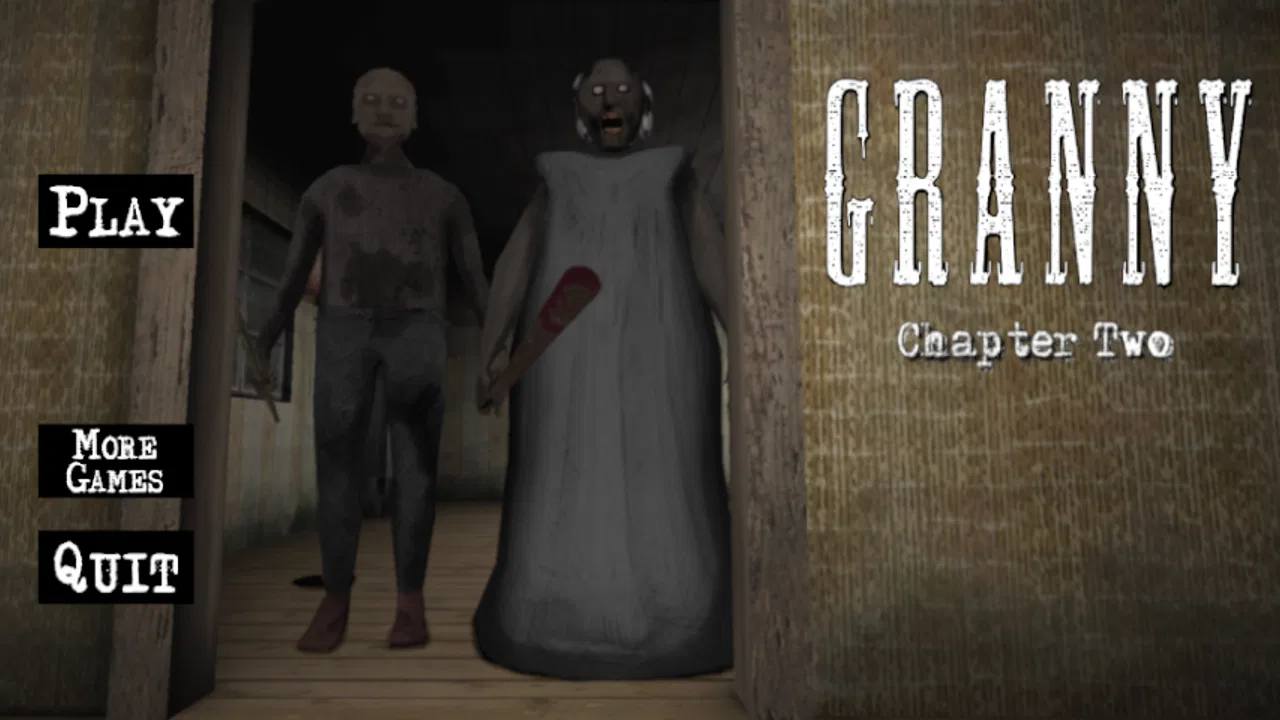
I spent time with Granny: Chapter Two as a mobile arcade horror game, and my first impression was that it asks for patience more than speed. The basic situation is simple: Granny and Grandpa have locked you inside their house, and every movement becomes a decision about noise, timing, and risk. What makes the experience memorable is not a long explanation or a complicated control scheme, but the pressure created by trying to understand the house while avoiding two threats.
That combination makes it easy to recommend to someone who enjoys tense, trial-and-error games in short sessions. It is free to play, carries a Teen content rating, and comes from DVloper, the developer behind this recognizable horror style. At the same time, I would not suggest it to anyone looking for a relaxed arcade game, a story-heavy adventure, or a forgiving experience. The game is deliberately uncomfortable, and some of its friction is part of the design rather than a technical problem.
Where the real difficulty begins
The first obstacle is not necessarily escaping. It is learning how the house reacts to you. A dropped object, a poorly timed movement, or an attempt to rush through an unfamiliar area can turn a promising run into a restart. I found that the most useful early habit was to treat the first attempts as reconnaissance rather than victories. Instead of trying to solve everything immediately, I paid attention to which rooms connected, where I had already searched, and which actions created danger.
You May Also Like

 Blood Strike: 2.5 Anniversary
Blood Strike’s Loadouts Turn Every Drop Into a Tactical Gamble
A close look at Blood Strike’s custom loadouts: how fast access to signature weapons reshapes its battle royale rhythm, rewards preparation, and narrows the gap between fights.

 Pandora - Music & Podcasts
Pandora’s Music Is Easy to Start, but Harder to Recover
Pandora’s strength is its low-effort path from a seed to a station. Its weak spot is how much confidence it asks you to place in connection, setup, and quiet recovery.

 8 Ball Pool
 Is Built on Rivalries, Rematches, and Routine
A close look at the rivalries, rematches, shared routines, and unanswered safety questions that turn a quick pool match into a persistent mobile community.

 Samsung Music
’s Quiet Strength Is Playing What You Already Own
Its reach comes less from spectacle than from dependable access to a personal library. That simplicity is both the app’s strongest retention engine and its ceiling.

 AccuWeather: Weather Radar
AccuWeather Review: A Quick, Clear Forecast for Everyday Decisions
For everyday plans, the best forecast is the one you can understand quickly. AccuWeather makes rain timing, radar, and local conditions easy to act on, with a few trade-offs.

 Hill Climb Racing
Why Hill Climb Racing Still Turns Crashes Into One More Run
A tiny car, a bumpy hill and one more upgrade: Hill Climb Racing keeps resurfacing because its simple chaos makes every near-miss feel personal.
More From Our News Desk
View All News


This is especially important because the presence of both Granny and Grandpa changes how I approached familiar routes. A path that seemed safe during one attempt could become a trap when I repeated it without checking the surroundings. The game rewards a slower rhythm: pause before entering a room, look for an exit, and avoid making noise simply because an item is nearby. That may sound obvious, but the pressure encourages hurried decisions.
New players can also get stuck because the game does not feel like a conventional arcade title with a clear sequence of stages and constant forward momentum. Progress depends on observation and experimentation. If you expect an obvious objective marker or a generous tutorial, the opening can feel vague. I had more success when I created my own short-term goals, such as learning one section of the house or identifying a useful object, instead of trying to complete the entire escape in one attempt.
The most useful mindset is to separate discovery from execution. During discovery, I accepted that I would make mistakes. During execution, I used what I had learned and avoided unnecessary risks. That small change made the game feel less random and helped me understand whether a failed attempt came from a bad decision or simply from not knowing the environment yet.
Why restarting is part of the loop
Repeated attempts can sound frustrating, but they are central to the appeal. Each restart gives you a chance to test a different route, handle an object more carefully, or move through a room with better timing. I did not see the resets as wasted time once I began treating them as information. The game becomes much less enjoyable if you demand steady progress every few minutes, but it becomes satisfying when you notice that a previously confusing section now feels predictable.
There is a trade-off here. Players who enjoy learning through failure will probably settle into the rhythm quickly. Players who prefer direct instructions may feel that the game is withholding too much. I would choose a more conventional arcade game instead if I wanted quick rewards, visible score chasing, or a clear level structure. This one is closer to a compact survival puzzle built around tension.
Setup checks before blaming the game
The game is listed for devices running Android 6.0 or later, and the current version is 1.2.4. Before judging the experience, I would first check that the phone or tablet meets that requirement and that the game has been installed from a legitimate app source. A device that is technically supported can still struggle if it is overloaded with other active apps, short on storage, or running under unusually heavy background activity.
My practical advice is to close demanding apps before starting a serious attempt, especially if the device is older. Horror gameplay depends on noticing small sounds and reacting quickly, so interruptions are more damaging here than in a turn-based game. I also prefer playing with notifications reduced or temporarily silenced. A sudden banner can break concentration at exactly the moment when a careful movement matters.
If the controls feel unresponsive, I would first check whether the issue happens everywhere or only during a tense encounter. A finger placed too close to the edge, a screen protector that does not register light touches well, or accidental contact with another gesture area can make movement seem unreliable. Cleaning the display and holding the device in a stable position are simple checks, but they genuinely matter in a game where small movements can have consequences.
Sound deserves its own check. I found that playing without audio removes a large part of the experience because sound helps me judge danger and movement. If the game seems strangely quiet, I would check the device volume, silent mode, connected headphones, and any system-level audio setting before assuming the game is broken. Using headphones can improve awareness, although players who are sensitive to sudden horror sounds may prefer a lower volume.
The title is free, which makes trying it easy, but free access does not make it suitable for every situation. The Teen rating is a useful reminder that the atmosphere and scares are aimed at older players rather than young children. I would avoid handing it to a child simply because it is available without an upfront payment. The right question is whether the player is comfortable with pursuit, suspense, and repeated failure.
Small preparation choices that improve a session
I recommend beginning with a short session when testing the game on a new device. That gives you time to notice heat, battery drain, touch behavior, and audio stability without committing to a long play period. If the phone becomes uncomfortable to hold or the screen dims aggressively, the problem may be the device environment rather than the game itself.
Another useful preparation step is to decide what kind of session you want. For a quick break, I would focus on exploring one area and learning one interaction. For a longer session, I would keep a mental map of routes and use each attempt to refine it. This prevents the common mistake of opening the game casually, becoming frustrated after one failure, and concluding that the whole experience is unfair.
Because the game relies on attention, I would also avoid playing while walking, commuting in a crowded place, or multitasking. That is not a technical requirement; it is a practical one. Looking away for even a moment can make a careful run collapse, and the game is much more enjoyable when you can give it uninterrupted focus.
Recovering after a failed run
When an attempt goes wrong, my first step is to identify the last decision I understand. Did I make too much noise, enter a room without an exit plan, or move because I felt rushed? That question is more useful than simply labeling the game unfair. If I can name the mistake, the next attempt has a purpose. If I cannot, I return to a safer area and observe before trying the same route again.
A helpful recovery workflow is to narrow the objective. Rather than attempting a complete escape immediately, I would use one run to inspect a room, another to test a route, and another to carry out a known action with less hesitation. This approach reduces mental overload. It also makes the game’s tension more manageable because every attempt has a smaller success condition.
I found that remembering locations is more valuable than memorizing a perfect sequence. The house can feel confusing when every object seems equally important, but a rough understanding of where I have already looked prevents circular wandering. If I repeatedly return to the same place, I treat that as a sign to change my route or reconsider what I am searching for, not as a reason to move faster.
When a run ends unexpectedly, I would not immediately restart in frustration. Taking a brief pause helps reset attention, particularly after a scare. The game is built to make you react emotionally, and rushing into another attempt while annoyed usually leads to the same careless movement. A short break can turn a string of failed runs into a productive learning session.
How to make exploration less wasteful
One of my favorite practical habits was checking the surroundings before interacting with anything. I looked for a retreat path, considered whether the action might create noise, and only then committed. This costs a little time, but it is usually cheaper than acting automatically and losing the attempt. It also changes the game from frantic searching into deliberate problem solving.
I would keep track of discoveries mentally in three groups: places already searched, routes that seem risky, and actions that still need testing. That simple classification is more useful than trying to remember every visual detail. It keeps the next attempt focused and stops the house from becoming a blur of repeated movements.
Another trade-off is speed versus information. Moving quickly may feel safer because you spend less time exposed, but rushing can cause you to miss clues or make noise. Moving slowly gives you more control but may increase the time spent in danger. I rarely used one approach everywhere. I moved carefully while learning a location, then became faster once I understood the route.
This is also where the game differs from many ordinary arcade alternatives. In a score-focused title, repeating a familiar action usually improves your result. Here, repetition is valuable only when it teaches you something or makes a known route more reliable. If you want immediate feedback and constant action, another arcade game will probably suit you better. If you enjoy mastering an environment under pressure, this structure is a strong fit.
When the game is not the cause
Not every problem that appears during play comes from the title itself. If movement feels inconsistent only when the device is charging, I would test another session away from the charger, since some setups can make touch input feel less precise. If sound cuts out only when switching between apps, I would check the phone’s audio behavior and connected accessories before reinstalling anything.
Performance can also be affected by the wider device environment. A nearly full storage drive, aggressive battery-saving mode, or many background processes may make any game feel less stable. Restarting the device, closing unused apps, and checking for available system space are sensible first steps. I would avoid repeatedly changing multiple settings at once, because then it becomes difficult to know which change helped.
If the game opens but a particular attempt behaves strangely, I would first repeat the situation carefully. A missed interaction may be caused by position, timing, or approaching from the wrong direction rather than a permanent fault. Reproducing a problem is important: an issue that happens once during a chaotic moment is different from one that occurs every time under the same conditions.
Reinstallation should be a later step, not the first reaction. Before using it, I would make sure I understand what may happen to local progress and whether I am comfortable starting over. Since the appeal depends heavily on learning the house, losing progress or familiarity can be more annoying than the original technical issue. Basic checks are safer and less disruptive.
Who should play and who should skip it
I think this is a good choice for players who enjoy tense exploration, environmental puzzles, and learning through repeated attempts. It works particularly well for someone who likes discussing routes with friends, testing theories, and gradually becoming calmer inside a place that initially feels unpredictable. Its large audience is reflected in an average rating of 4.3 from around 1.2 million ratings, and the game has passed 100 million installs, but popularity does not remove its specific demands.
I would skip it if you dislike being chased, restarting after mistakes, or working out objectives without much hand-holding. It is also a poor choice for a quick, quiet game before sleep if horror tension keeps you alert. Someone looking for a narrative adventure with extensive dialogue should choose a different kind of game, while someone wanting a traditional score attack may prefer a faster arcade experience.
For a realistic everyday scenario, imagine having fifteen minutes between errands. I would play one or two attempts, using the time to learn a route rather than expecting a full completion. That works because each session can produce a small piece of knowledge. On the other hand, playing in a noisy waiting room may be disappointing because losing the audio cues and concentration removes much of what makes the game effective.
My practical verdict after learning the house
Granny: Chapter Two is a focused arcade horror game that succeeds through pressure, observation, and repetition. I like that its strongest moments come from my own decisions: choosing whether to investigate, deciding when to retreat, and resisting the urge to rush. The game does not need a complicated presentation to create tension because the house itself becomes the puzzle and every mistake makes the next attempt more informed.
Its limitations are equally clear. The learning curve can feel abrupt, repeated failure will not appeal to everyone, and the lack of a relaxed mode makes it a specialized recommendation rather than a universal one. The free price removes a financial barrier, but the real cost is attention and patience. Players should also take the Teen rating seriously and choose an appropriate setting for the horror atmosphere.
After checking the device, using audio properly, and treating failed runs as information, I found the experience much more rewarding. My best advice is to explore deliberately, remember routes instead of chasing speed, and pause when frustration starts replacing concentration. Those habits do not make the game easy, but they make its difficulty understandable.
For me, DVloper’s game is worth trying if you want a compact escape challenge with genuine suspense and do not mind learning through mistakes. It is not the right pick for casual relaxation or effortless progress. If that distinction matches what you want from an arcade game, the free download and broad device support make it an easy experiment; if not, choosing a calmer or more immediately structured alternative will save you a frustrating evening.
FAQs for Granny: Chapter Two
01What is the main objective in Granny: Chapter Two?
In Granny: Chapter Two, players must escape from the house of Granny and her partner, Grandpa, within five days. The game challenges players to solve puzzles, find hidden objects, and avoid being caught. Each gameplay session presents a new layout, enhancing replayability and keeping the experience fresh and engaging.
02How do the controls work in Granny: Chapter Two?
Granny: Chapter Two features intuitive touch controls optimized for mobile devices. Players can navigate the environment using a virtual joystick for movement and interact with objects by tapping. The game also includes options for crouching and hiding, which are crucial for avoiding detection by Granny and Grandpa.
03What are the differences between Granny and Grandpa in the game?
Granny and Grandpa have distinct behaviors and abilities. Granny has sharp hearing and will investigate any noise, making stealth essential. Meanwhile, Grandpa is hard of hearing but more resilient and difficult to evade once he spots the player. Understanding their patterns is key to successfully escaping.
04Are there any in-app purchases or ads in Granny: Chapter Two?
Granny: Chapter Two is a free-to-play game, supported by ads. Players can choose to remove ads via a one-time in-app purchase. This allows for a distraction-free experience. There are no additional in-app purchases that affect gameplay, ensuring a fair and balanced experience for all players.
05What are the system requirements for Granny: Chapter Two?
Granny: Chapter Two is available on both Android and iOS platforms. For Android, the game requires Android 4.4 or higher, while iOS users need iOS 9.0 or later. The game is lightweight and runs smoothly on most modern devices, although older hardware might experience reduced performance.
Pros
- Engaging horror atmosphere and visuals.
- Challenging puzzles to solve.
- Multiple difficulty levels available.
- Co-op mode for multiplayer experience.
- Regular updates with new content.
Cons
- Occasional glitches disrupt gameplay.
- Limited save points can frustrate players.
- Can be too difficult for casual gamers.
- Ads can interrupt the immersive experience.
- Requires a stable internet connection.

Granny: Chapter Two
Gallery